
Trezor.io/Start® — Starting Up Your Device | Trezor®
Get started at Trezor.io/start to set up your Trezor device, connect your wallet, manage supported crypto, check balances, and explore useful features.
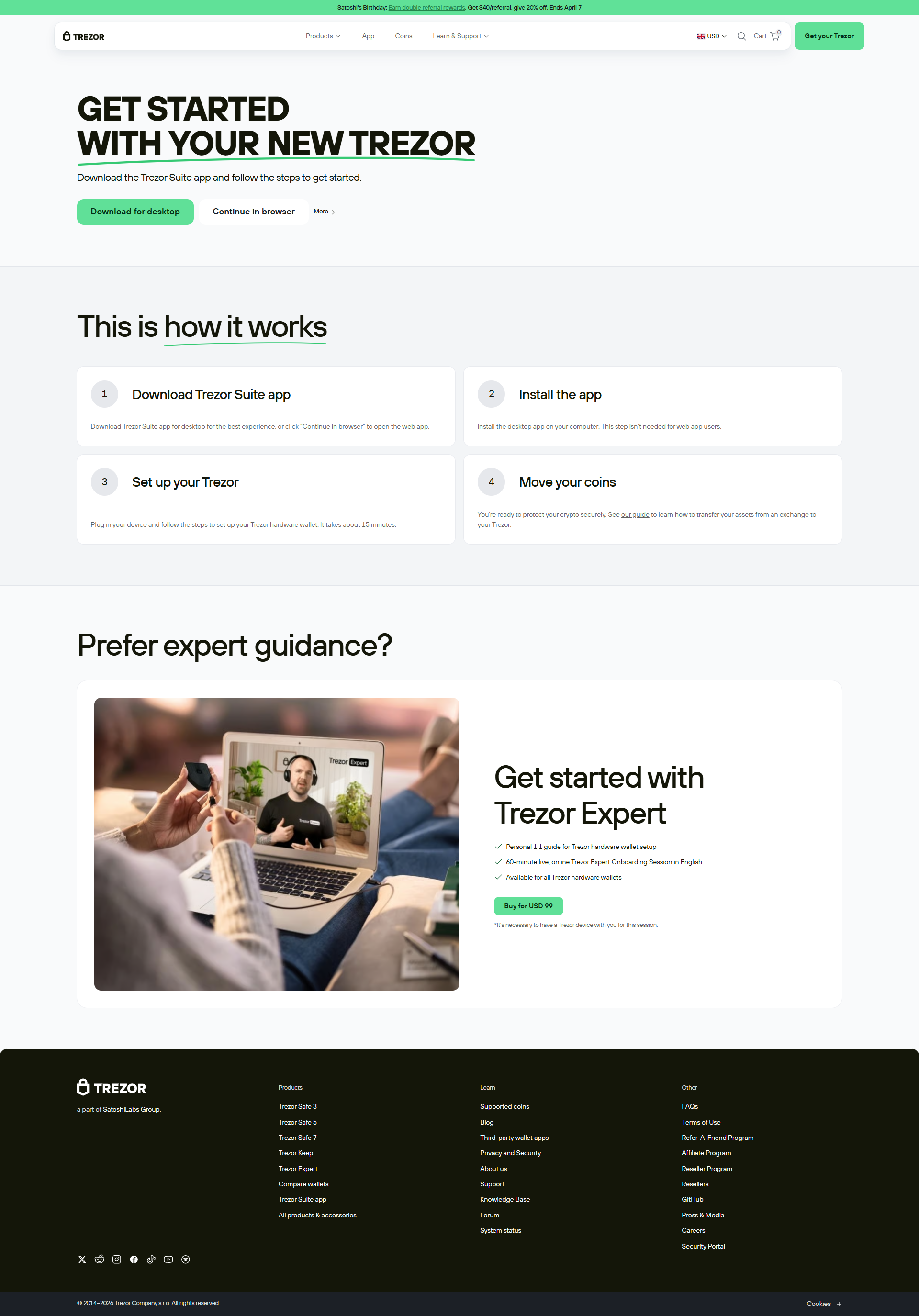
Trezor.io/start: Get Started With Crypto Security
For cryptocurrency users who want to explore self-custody, setting up a hardware wallet is an important first step. Trezor.io/start provides a familiar starting point for users looking to configure a Trezor device and learn how to use its wallet environment.
A successful setup is about more than connecting a device. It is also an opportunity to learn how to protect recovery information and approve transactions carefully.
Setting Up Your Trezor Device
Begin by using Trezor's official setup instructions. Follow the guidance for your particular hardware model and use the recommended wallet software.
During setup, pay attention to security-related prompts and verify information directly on the physical device when instructed. Avoid using unofficial applications or downloading wallet software from unknown sources.
After setup is complete, you can begin exploring supported wallet functions.
Key Features to Explore
Depending on your device, cryptocurrency, and available services, you may be able to:
- Monitor cryptocurrency holdings
- Create and manage supported accounts
- Send and receive digital assets
- Review transaction history
- Manage wallet activity through Trezor Suite
- Confirm transactions using the hardware device
- Explore supported crypto services
The exact functionality depends on current Trezor support and the asset you are using.
Why Start With a Hardware Wallet?
A hardware wallet is designed to keep sensitive wallet credentials protected by a dedicated physical device. Instead of treating security as something to consider later, users can build protective habits from the moment the wallet is configured.
A larger companion application can help with account management, while the hardware device provides a separate place to review and authorize transactions.
Simple Security Rules
Your recovery seed should always remain confidential. Do not photograph it, upload it to cloud storage, send it through chat, or type it into websites that ask for it unexpectedly.
Also be careful with fake support accounts and phishing websites. A professional-looking page does not necessarily mean it is legitimate.
When sending cryptocurrency, double-check the destination address and amount. Review the transaction information shown on your Trezor device before approving the operation.
FAQs
Who can use Trezor.io/start?
It is intended as a starting point for people setting up and learning to use a Trezor hardware wallet.
What is Trezor Suite?
Trezor Suite is Trezor's wallet software environment for managing supported crypto assets and interacting with compatible Trezor devices.
Can I share my recovery seed with support?
No. Your recovery seed should remain private and should not be provided to support agents or other people.
Why verify transactions on the device?
Checking transaction information directly on the hardware device provides an additional opportunity to catch incorrect or unexpected details before approval.
Conclusion
Getting started with a hardware wallet does not need to be complicated. Trezor.io/start offers a practical starting point for learning the setup process, exploring wallet features, and developing responsible security habits.
Use official software, keep your recovery information private, and take time to verify every transaction before confirming it.
Additional Resources
- Trezor hardware-wallet setup
- Trezor Suite guides
- Recovery seed protection
- Hardware wallet security education
- Safe crypto transaction practices
Updated about 6 hours ago