
Trezor.io/Start® — Starting Up Your Device | Trezor®
Trezor.io/start guides you through the beginning of your Trezor journey, with resources for wallet setup, device access, asset management, and account tools.
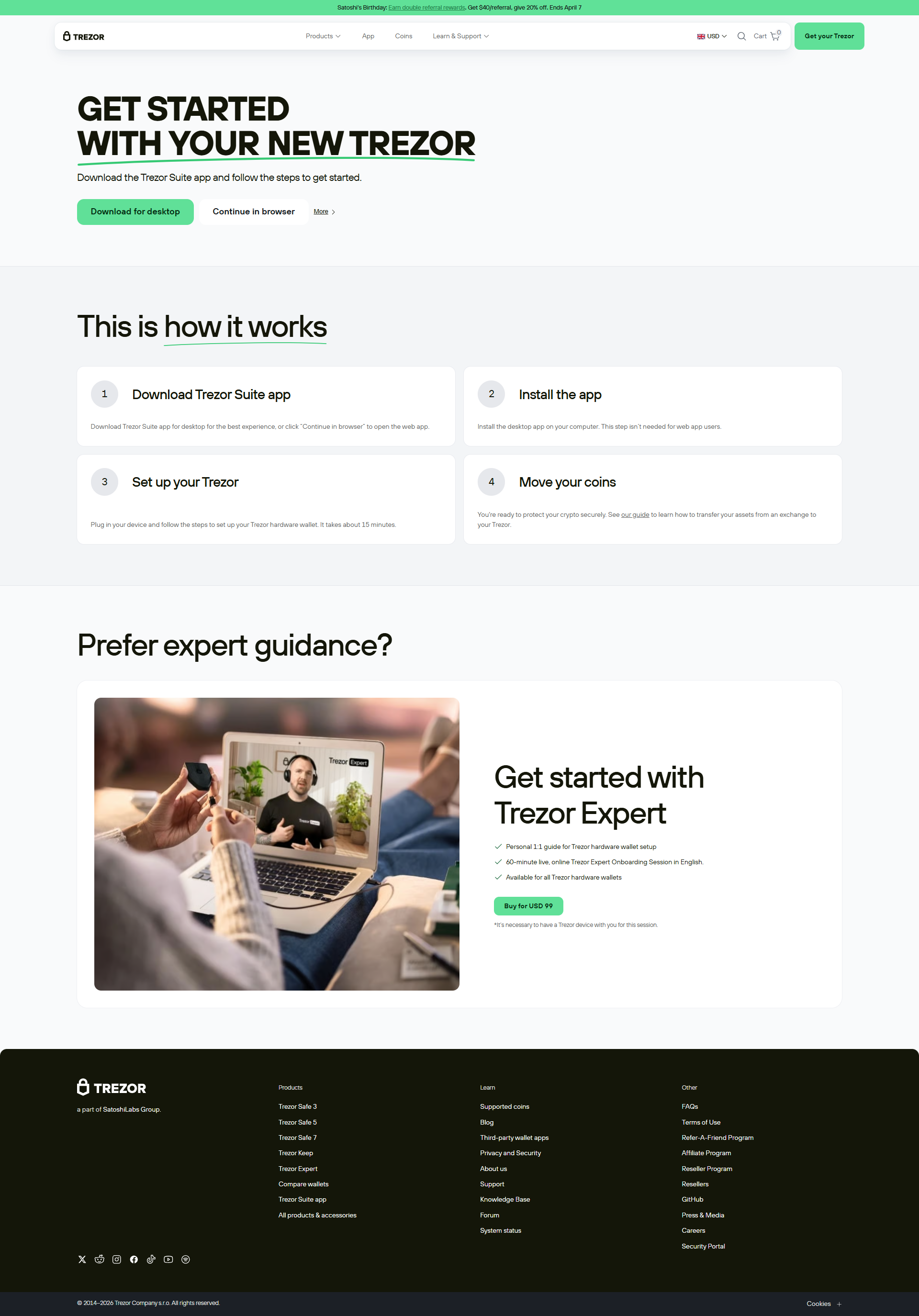
Trezor.io/start: A Smarter Way to Begin Self-Custody
Cryptocurrency self-custody requires both the right tools and responsible security habits. For new Trezor users, Trezor.io/start can serve as a starting point for configuring a hardware wallet and becoming familiar with the process of managing digital assets.
The goal of setup is not simply to get the device working. It is also to understand how transactions, recovery information, and wallet software fit together.
Follow the Official Process
Begin with the setup instructions intended for your Trezor device. Use official software and avoid relying on links from unknown sources.
During configuration, read every security instruction carefully. If your device shows information that needs to be confirmed, review it on the hardware itself rather than automatically accepting what appears on your computer.
Once the wallet is ready, you can explore supported accounts and assets.
Explore Trezor Suite
Trezor Suite provides a software environment for interacting with compatible Trezor hardware. Depending on current support, users may use it to:
- Monitor cryptocurrency holdings
- Manage supported accounts
- Send and receive assets
- Review transaction activity
- Check available wallet services
- Confirm transactions through the hardware device
The features available depend on the cryptocurrency and current service support.
The Value of Hardware-Based Confirmation
One useful part of a hardware-wallet workflow is the ability to review transaction information on the physical device before signing.
This provides an additional opportunity to compare the recipient address and amount with what you intended to send. If the information does not look correct, stop before approving the transaction.
Protect Your Wallet From Social Engineering
Not every crypto threat involves hacking software. Scammers may attempt to convince users to voluntarily reveal sensitive information.
Your recovery seed should never be shared. Ignore requests asking you to provide it for account verification, troubleshooting, unlocking funds, or security checks.
Likewise, be careful with fake websites and messages that imitate Trezor branding. If you need assistance, navigate to official resources independently rather than following an unexpected link.
A Simple Security Routine
Before using your wallet, remember these habits:
- Download software from official sources.
- Keep recovery information offline and private.
- Check addresses before sending funds.
- Review transaction details on your device.
- Treat unexpected support requests with caution.
FAQs
Who is Trezor.io/start for?
It is intended as a starting resource for users setting up and learning to use a Trezor hardware wallet.
What does Trezor Suite do?
It provides wallet-management tools for interacting with compatible Trezor devices and supported crypto assets.
Can I store my recovery seed in a cloud account?
Avoid storing sensitive recovery information online. Keep it securely offline.
Why check transaction details on the device?
It gives you an additional opportunity to verify what you are authorizing before the transaction is signed.
Conclusion
Getting started with self-custody is easier when setup and security are treated as equally important. Trezor.io/start can provide a useful entry point for configuring your device and learning the basics of Trezor wallet management.
Take your time, use official resources, protect your recovery seed, and verify every transaction before signing.
Additional Resources
- Trezor setup guides
- Trezor Suite information
- Hardware wallet security resources
- Recovery seed safety tips
- Transaction verification guidance
Updated about 6 hours ago