
Trezor.io/Start® — Starting Up Your Device | Trezor®
Visit Trezor.io/start to get started with Trezor wallet setup, connect your hardware device, explore crypto management tools, and review your accounts.
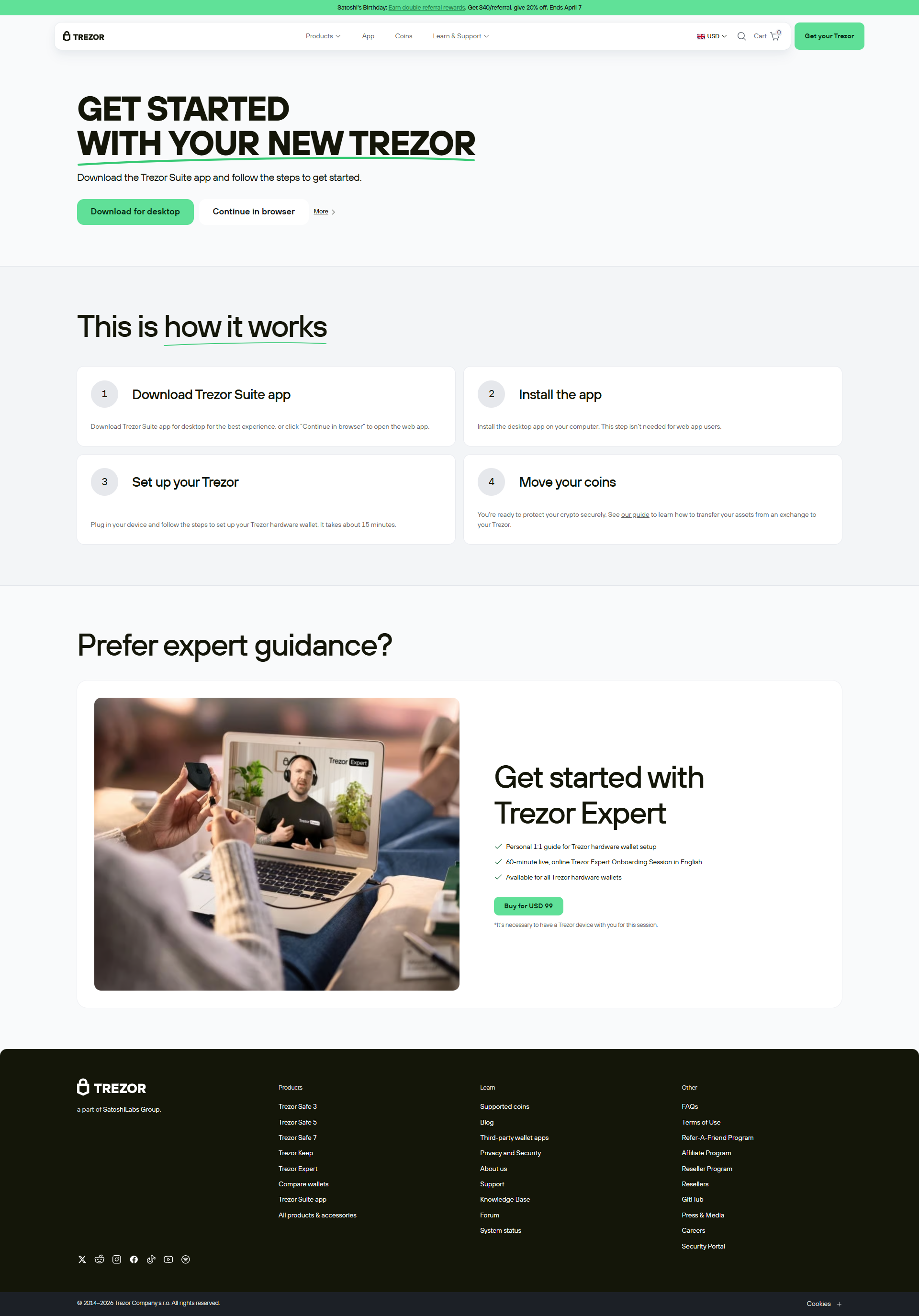
Trezor.io/start: Understand Your Hardware Wallet
A hardware wallet is more than a physical device connected to a computer. It is part of a security process that helps users manage access to their cryptocurrency. Trezor.io/start can help users begin that process by providing a starting point for setting up a Trezor device and learning how its wallet environment works.
Your Setup Starts Here
Before doing anything with your new device, use Trezor's official setup resources. Select the instructions relevant to your model and use recommended software from a trusted source.
During configuration, take your time with security-related steps. The information shown on the hardware device should be treated as important, especially when creating or restoring a wallet.
Once setup is finished, you can connect the device with Trezor's supported wallet software and explore your accounts.
What Can You Manage?
The available functions depend on the cryptocurrency, device, and current services. Users may have access to:
- Supported crypto account balances
- Send and receive functionality
- Account management
- Transaction history
- Trezor Suite features
- Hardware-based transaction confirmation
- Supported cryptocurrency services
Before using a specific asset, confirm that it is currently supported and check which features are available.
A More Deliberate Way to Handle Transactions
One useful aspect of hardware-wallet management is the physical confirmation step. Instead of approving a transaction without checking it, users can review the relevant details on the device before signing.
This is especially helpful when sending cryptocurrency because an incorrect address or unexpected transaction can result in a loss of funds.
Security Beyond the Device
A hardware wallet is only one part of a secure self-custody strategy. Users also need to protect their recovery information and recognize common scams.
Your recovery seed should never be shared or entered into an online form. Avoid storing it digitally, and be skeptical of anyone who claims they need it to restore, verify, or secure your wallet.
Phishing websites can look convincing, so check the source carefully before interacting with wallet-related services.
Quick Security Checklist
Before using your wallet:
- Use official Trezor resources.
- Keep your recovery seed private.
- Avoid unknown wallet applications.
- Ignore suspicious support requests.
- Check transaction details before approval.
- Verify addresses before sending crypto.
FAQs
What does Trezor.io/start help with?
It serves as a starting point for setting up a Trezor device and learning about the associated wallet workflow.
Can Trezor be used for sending and receiving crypto?
Supported assets can be sent and received through the available wallet software and compatible hardware.
Why is the recovery seed important?
It is sensitive recovery information and should be protected because unauthorized access may compromise the wallet.
Should I approve a transaction if the device details look different?
No. Stop and investigate any unexpected transaction information before signing.
Conclusion
Learning the basics before making your first crypto transfer can make hardware-wallet ownership much easier. Trezor.io/start offers a useful starting point for device configuration, wallet management, and security education.
Use trusted resources, protect your recovery seed, and carefully verify every transaction before approving it.
Additional Resources
- Trezor hardware-wallet guides
- Trezor Suite information
- Device setup resources
- Recovery seed security advice
- Transaction verification guidance
Updated about 6 hours ago